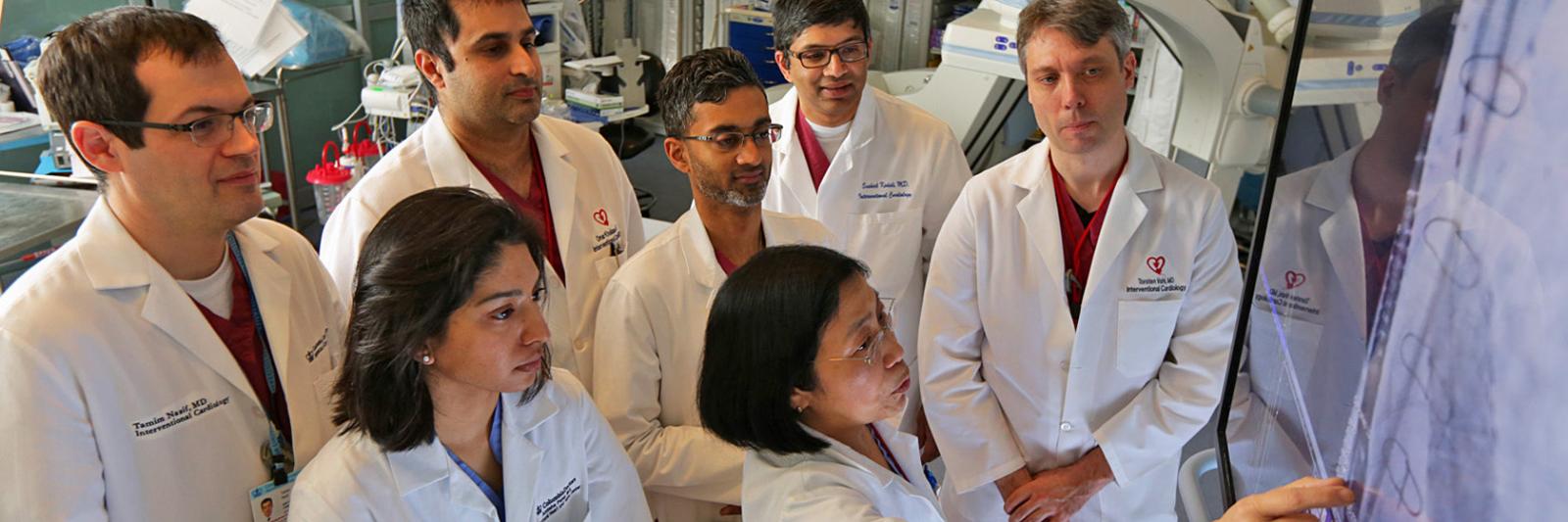
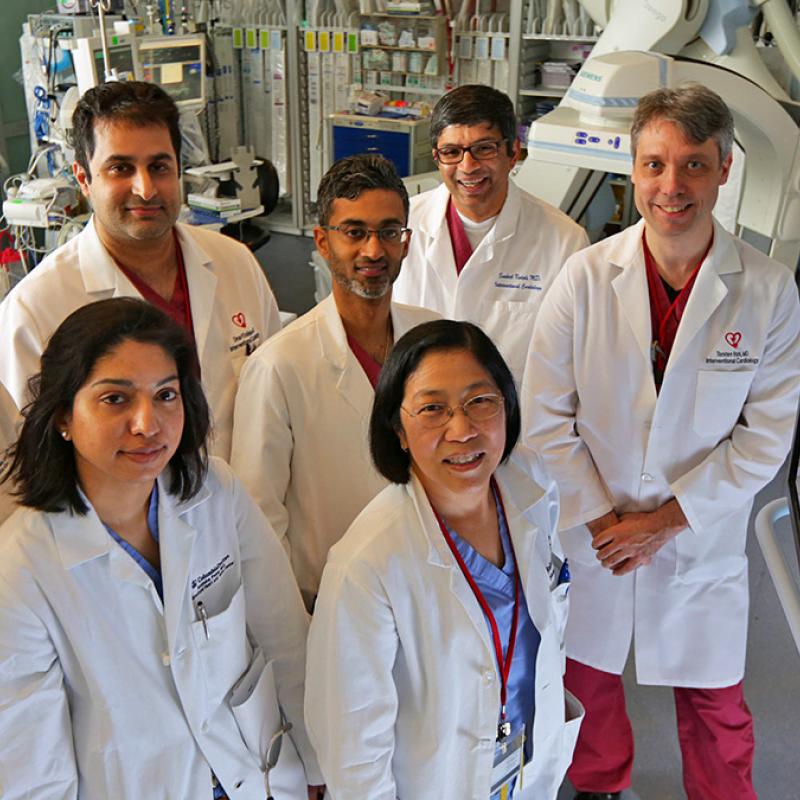
The Heart Valve Center at NewYork-Presbyterian/Columbia University Medical Center (CUMC) has more than seven years of clinical and academic leadership in the care of patient with vavular heart disease. The center is a collaborative effort between the The Center for Interventional Vascular Therapy, led by Martin B. Leon, MD and the Department of Cardiothoracic Surgery, led by Craig R. Smith, MD.
Today, our program is led by co-directors Mathew R. Williams, MD one of just a few physicians in the world trained in both cardiac surgery and interventional techniques and Susheel K. Kodali, MD an interventional cardiologist, both highly skilled valve disease specialists. Rebecca Hahn, MD, director of invasive and valvular echocardiography, is a key member of the physician leadership team. Her opinion is sought by hundreds of physicians every year who want their patients to benefit from her advanced imaging and diagnostic expertise.
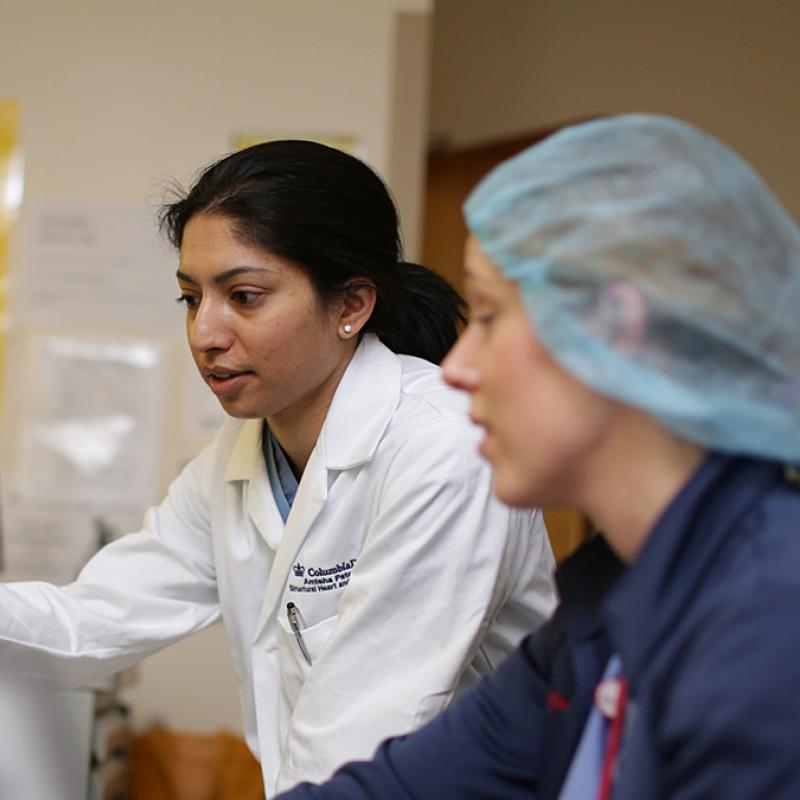
Dr. Williams and Dr. Kodali are supported by a robust team of clinical specialists to compassionately attend to all patient needs. Our program's success has been built upon the commitment of the heart team across the continuum of patient care with a focus on a multidisciplinary approach. Together, the team assesses each patient using state of the art diagnostic tools and recommends appropriate treatment solutions including interventional and surgical options and medical therapy based on what is in the best interest of the patient. We are committed to comprehensive communication amongst our team, with the patient, with family members, and with referring physicians to ensure that everyone stays informed and involved in the patient's care.
CUMC is a pioneer in investigating treatment solutions for valve disease. We served as the lead investigational site for the PARTNER Trial (Placement of AoRTic TraNscathetER Valve), under the leadership of National PIs, Dr. Leon and Dr. Smith, which led to the approval of transcatheter aortic valve replacement (TAVR) in the U.S. in November 2011. As a result of our involvement, CUMC has now performed over 600 research and FDA-approved TAVRs, more than any other institution in the United States. Today, we are involved in the PARTNER II Trial which is evaluating TAVR for an expanded patient population. Additionally, we are participating in the COAPT Trial which is examining the safety and effectiveness of a minimally invasive catheter-based treatment for mitral valve disease (see Mitral Valve Section for more details).
The aortic valve is located on the left side of the heart and serves as the gateway between the left ventricle, the largest chamber of the heart, and the aorta, the largest artery in the body. The aortic valve is normally comprised of three leaflets (flaps) which open and close to regulate the supply of blood to the body and prevent blood from flowing back into the heart.
There are two common conditions that can affect the aortic valve's ability to regulate blood flow:
The heart of those who suffer from aortic valve disease has to work harder to pump blood to the body. Eventually this will cause a weakening of the heart muscle increasing the risk of irreversible damage and heart failure. Someone with aortic stenosis will experience shortness of breath particularly during exertion, chest pain (angina), heart palpitations, weakness and tiredness, dizziness and fainting. These symptoms will cause a decrease in one's quality of life and potentially death if left untreated.
Aortic Valve disease can be treated by repairing or replacing the aortic valve with a bioprosthetic (tissue) or mechanical valve. The gold standard for treating aortic valve disease is open heart surgery which is a safe and effective treatment for most patients with the disease. The procedure may require a sternotomy (opening of the chest bone) or, in select cases, may be performed through a less invasive approach, using several small incisions.
A new minimally invasive technique, called Transcatheter Aortic Valve Replacement (TAVR), is now available for those with severe aortic stenosis who are too high risk or unable to undergo surgery. A prosthetic valve is delivered to the heart, most often through the femoral artery (in the groin), with a catheter guided by a special type of x-ray. The prosthetic valve is carefully positioned inside the patient's own valve and expanded with a balloon. The diseased leaflets are pushed aside and replaced with the new valve which will immediately begin to function. TAVR usually results in less post-procedural discomfort, a shorter stay in the hospital, and often a quicker recovery.
The mitral valve is located on the left side of the heart and lies between the left atrium (the upper heart chamber) and the left ventricle (the lower heart chamber). The mitral valve has two leaflets (flaps) which open and close to regulate the flow of blood between these two chambers of the heart.
Mitral valve disease is the most prevalent form of valve disease. There are two common conditions that can affect the mitral valve's ability to regulate blood flow:
If the mitral valve disease is mild, medicine will be prescribed to treat the symptoms. If the disease is more severe, the current preferred treatment is a surgical repair of the patient's valve. The surgeon accesses the heart through a sternotomy (opening of the chest bone) and excises or repositions the diseased valve leaflets. In instances where the valve is severely diseased a surgeon will perform a valve replacement using a mechanical or bioprosthetic valve. The advantage to surgery includes an improved quality of life and expanded life expectancy.
A new catheter-based treatment for mitral valve regurgitation is currently under investigation to evaluate its safety and effectiveness. In this procedure, a metal clip is advanced on a catheter delivery system, most often through the femoral artery (in the groin) and guided by a special type of x-ray, into the mitral valve to clip the leaflets of the valve together to reduce the amount of blood that can flow back into the left atrium. CUMC is currently enrolling patients in this study who have been diagnosed with moderate-to-severe or severe functional mitral regurgitation (FMR) and who are too high-risk to undergo mitral valve surgery. This trial is led by William Gray, MD along with other physicians including Michael Argenziano, MD, Susheel K. Kodali, MD, and Mathew R. Williams, MD. Participation in a clinical trial is always on a voluntary basis. For further information please contact The Heart Valve Center at 212-342-0444
Welcome to the Heart Valve Center at NewYork-Presbyterian Hospital, Columbia University Medical Center. It is our commitment to provide you with the highest quality of care. Your trust in our knowledge and expertise is very important to us, and we do not take that for granted. Our commitment is to provide you with the most accurate assessment of your medical condition and to provide you with the best possible medical care and treatment options in a compassionate and caring environment.
The first step is to schedule an appointment for an evaluation by contacting the Heart Valve Center at 212-342-0444 and speaking with a clinical coordinator. New patient appointments are generally scheduled on Mondays and Wednesdays during Valve Screening Clinic. Below please find some tips on how to prepare for your appointment:
During your appointment, you will meet with members of our multidisciplinary heart team including a cardiothoracic surgeon; an interventional cardiologist; and other medical personnel. Below is a sample of how the time is organized:
*Note: If you have an echocardiogram or a CT scan during your appointment the results will not be available until later in the week. One of our physician assistants will call you on Thursday or Friday of that week to discuss the test results with you once they are available.
The foundation of our Heart Valve Center is to provide comprehensive and coordinated medical services to those who suffer from valvular heart disease. We take a multidisciplinary team approach to patient care, and consider referring and primary care physicians an extension of our team. If your patient is evaluated at our center, you will be contacted to discuss our recommended treatment plan for your patient which may include an interventional or surgical treatment option, or medical therapy based on what is in the best interest of the patient. We will maintain an open line of communication with you throughout your patient's care and treatment. And your patient will always be referred back to you for follow-up care.
We welcome the opportunity to be of service to you, your patients, and their families. We have well-rounded experience and the clinical competence to provide you with the assurance that patients you refer to us will receive exceptional care and optimized outcomes.
To refer a patient for a consultation, or to speak with one of our medical professionals, please call our center at 212-342-0444. On behalf of the Heart Team we thank you for choosing our Heart Valve Center.
Heart Valve Center
NewYork-Presbyterian /
Columbia University Medical Center
Email: heartvalveinfo@columbia.edu
Phone: 212-342-0444
Fax 646-426-0204